Family health, made actionable: building SVAAS
Most health apps store records or count steps. SVAAS turns the medical information a family already has into small daily actions people can actually keep.
- Mobile app
- Health
Not a record store. Not a step counter.
Most health apps do one of two things: they store your records, or they track your steps. Neither helps much with the medical stuff that already exists in a family's life — lab reports, prescriptions, a parent's medicine schedule.
Those things don't need another place to be stored. They need to turn into action: the right tablet at the right time, a habit that actually sticks, a report someone finally understands. SVAAS takes the information a family already has and converts it into small daily actions, all under one account.
“The goal isn't more health data. It's fewer missed doses and less digging for old reports.”
Who it's for
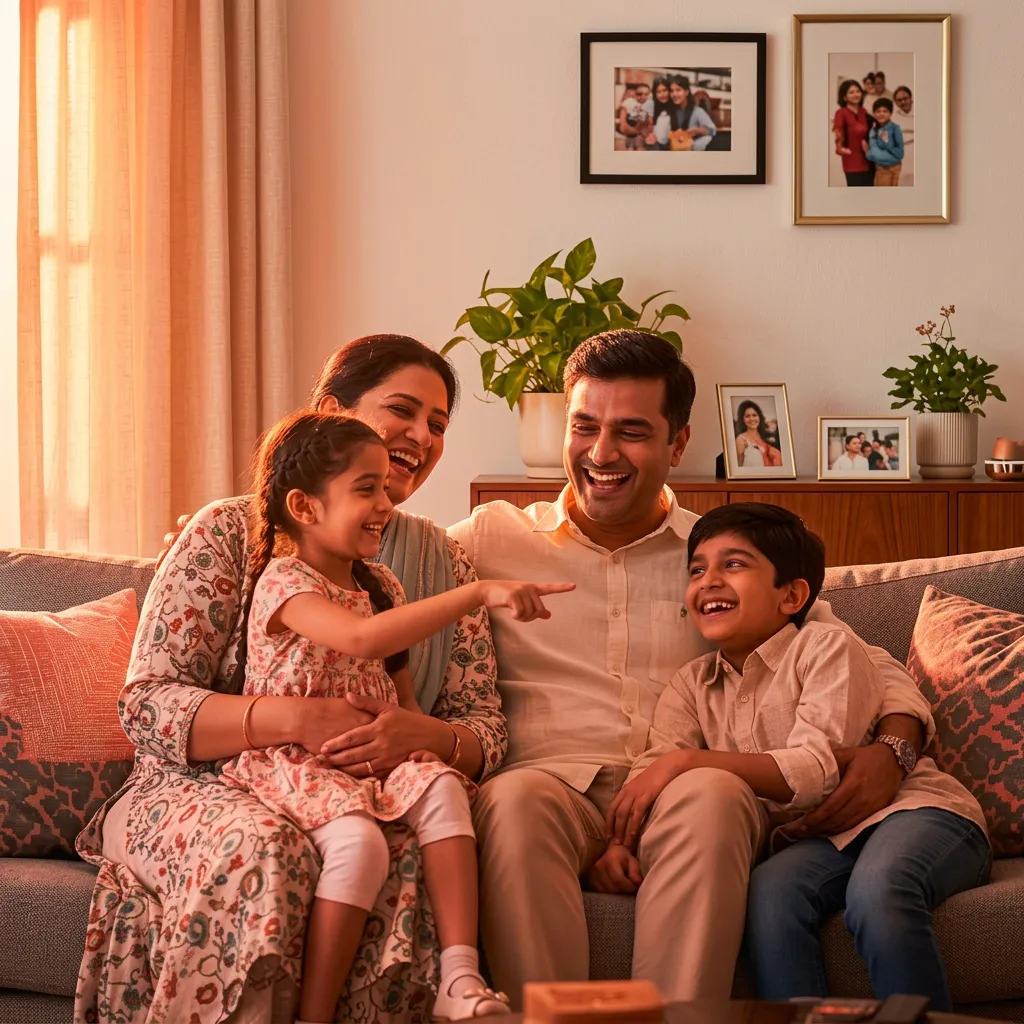
In most families, one person quietly carries everyone's health. They remember their father's blood pressure medicine, dig out old reports before a doctor's visit, and squeeze their own health in at the bottom of the list.
Every design decision in SVAAS starts with that person. If a feature makes their day heavier — more notifications, more screens, more things to remember — it doesn't make the cut, however clever it is.

Habits that fit a real day
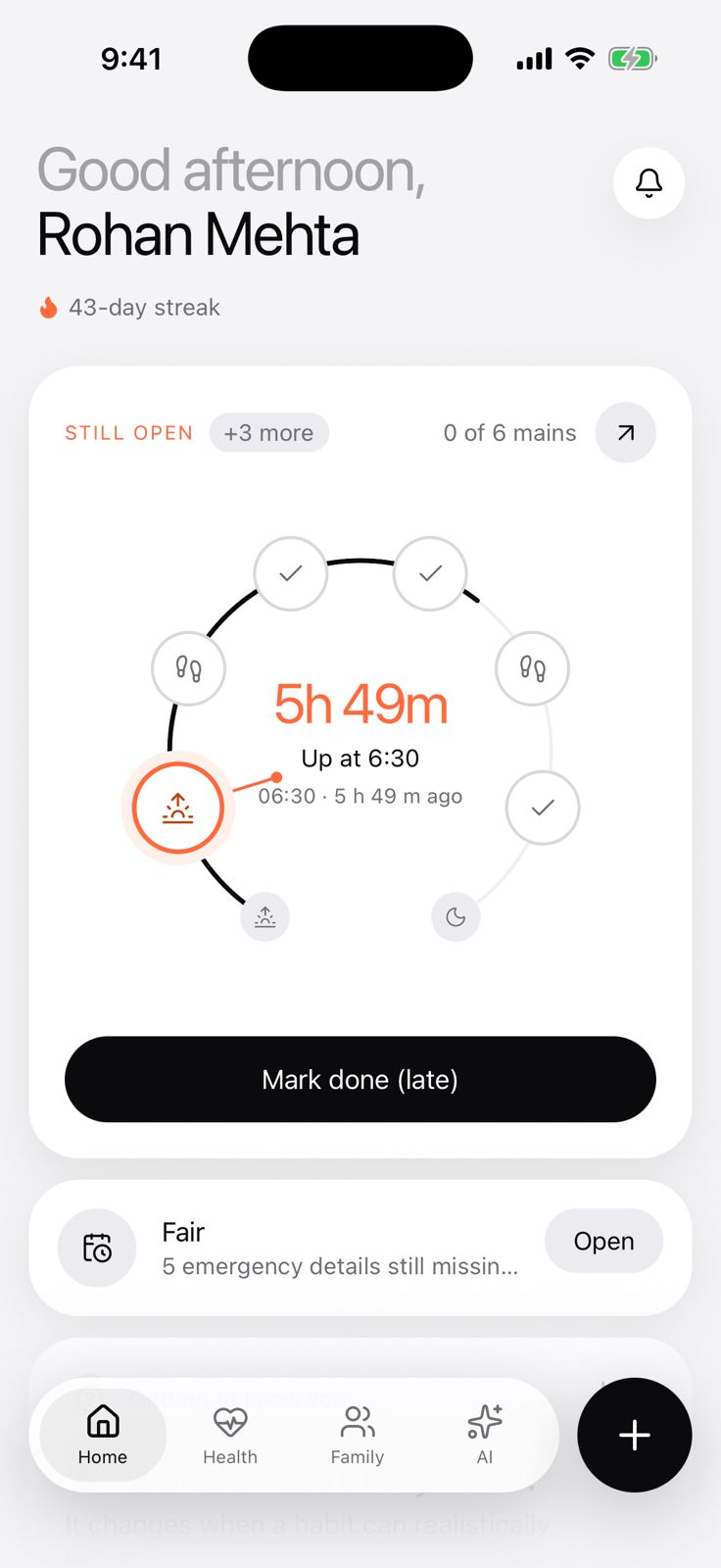
The Habit Engine is the heart of the product. You answer a few lifestyle questions and SVAAS suggests habits — then chains them to your real day: wake-up, meals and sleep. A habit that hangs off something you already do is far more likely to stick than one set for an arbitrary time.
Proof is simple: a tap, a photo or a timer. No smartwatch is required, which matters for older family members who will never wear one. The home screen shows one dial for today's habits, and nothing else competes with it.
Medicines as a habit, not an alarm
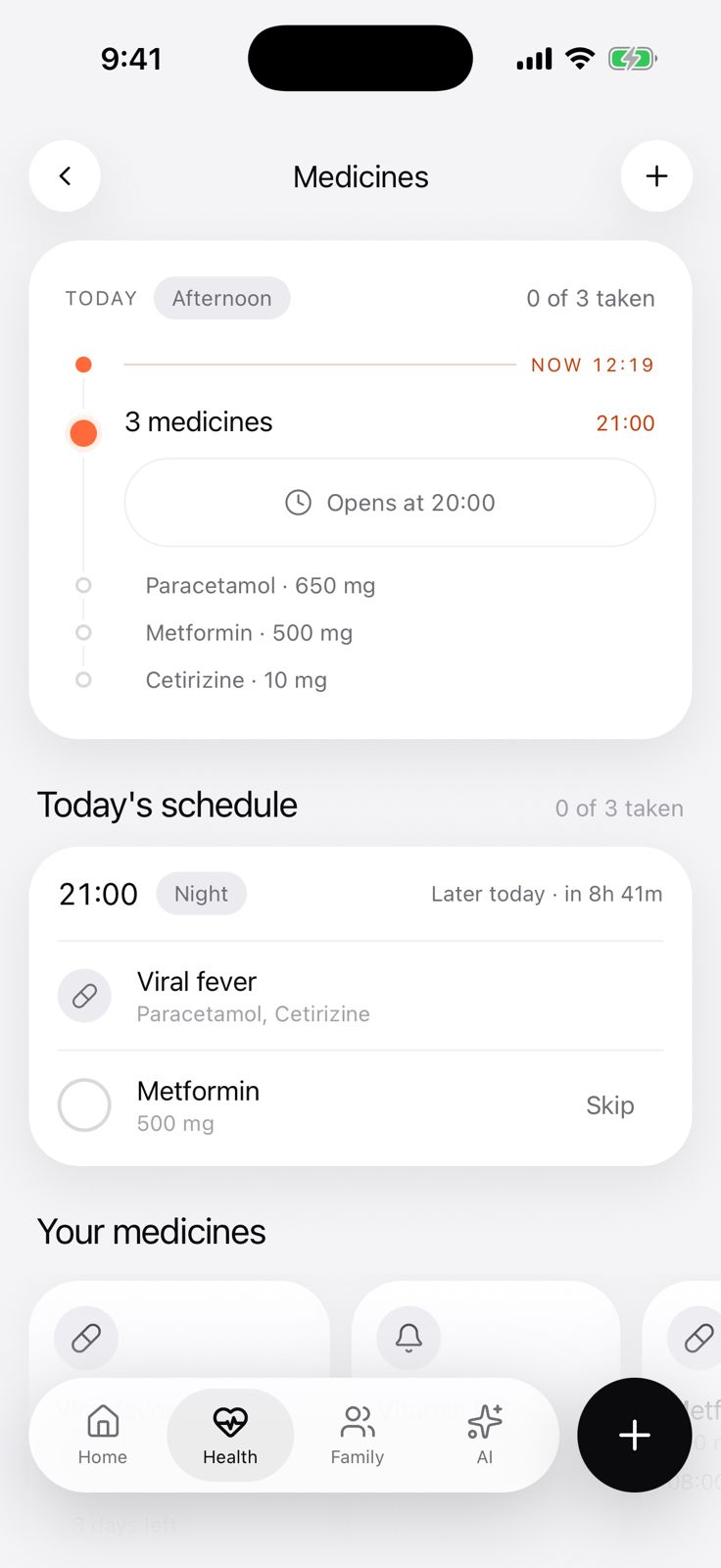
Medication apps often fire a notification for every pill. Someone on four morning medicines gets four alerts, starts ignoring them, and eventually turns them off. SVAAS treats medicine like any other habit.
Snap the prescription. SVAAS reads the whole course, so nobody types in doses by hand.
Bundle by time slot. Four morning medicines become one reminder.
Escalate when it matters. If a dose is missed, the reminder escalates instead of silently expiring.
One account for the whole family
Family Mode lets up to ten people share one account, with three roles: self, caregiver and dependent. A caregiver can set a parent's habits and see their timeline, without the parent needing to manage the app themselves.
There's a family feed, designed so you see what's happening without being buzzed by it. And every member has an emergency card — blood group, conditions and contacts — behind a QR code, ready when it's needed most.
10
people can share one SVAAS family account, each with their own timeline and habits.
The vault and the AI coach
The Health Vault puts reports, prescriptions, vitals and appointments on one timeline, for one person or the whole family. Every document gets an AI summary, so a lab report becomes something you can actually read.
The AI Health Coach explains reports and prescriptions in plain language and helps turn them into a habit plan. We were deliberate about its limits: it supports decisions and never diagnoses, and it's there when you ask for it rather than pushed into every screen.
“A habit plan, not a chart.”
What we learned
Design for the caregiver
The person managing everyone's health is the real user, even when they're not the patient.
Fewer, better reminders
Bundled reminders get acted on. A stream of alerts gets switched off.
No hardware required
Tap, photo and timer work for every age; wearables don't.
AI with clear limits
Plain-language help is valuable. Diagnosis is not the app's job.
Want the screen-by-screen tour? Read the SVAAS case study.
- Mobile app
- Health
- AI